
Laboratory Furnaces

Laboratory Chamber Furnace - ELF

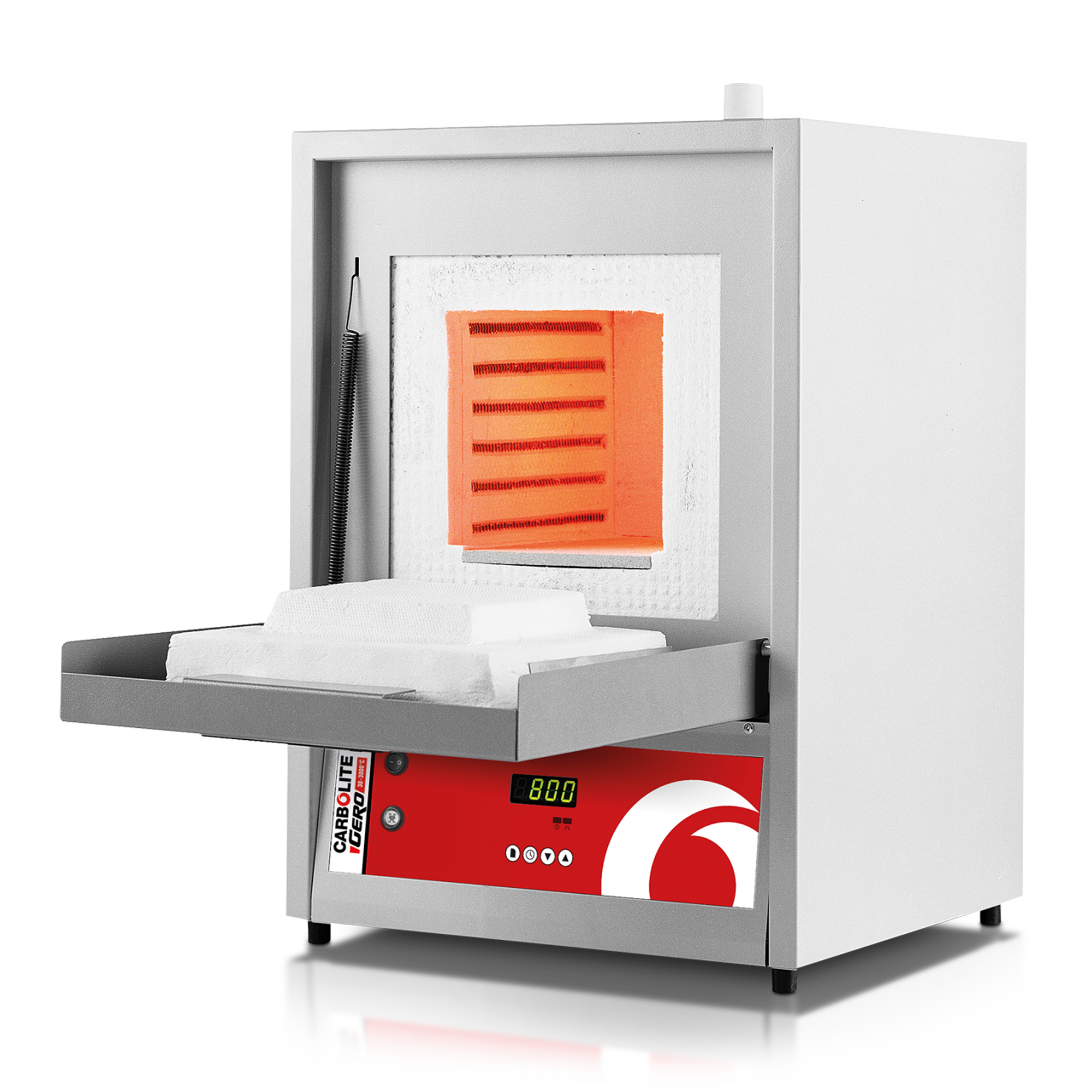
The ELF laboratory furnaces comprise 3 bench mounted models designed for light duty and general use up to 1100 °C. These laboratory furnaces have a simple drop down door and a top mounted ceramic chimney. The combination of low thermal mass insulation and free radiating wire elements embedded in the chamber sides provide efficient heating.

Standard features

  • 1100°C maximum operating temperature
  • 6, 14 or 23 litre chamber volumes
  • Drop down door with air gap to minimise external temperature
  • Carbolite 301 controller, with single ramp to set-point & process timer
  • Delayed start / process timer function as standard
  • Vacuum formed, low thermal mass insulation
  • Hard ceramic hearth fitted as standard
  • Ventilated via top mounted ceramic chimney

Options (specify these at time of order)

  •  
    Over-temperature protection (recommended to protect valuable contents & for unattended operation)

Test Form

how we can help you ?*

FAQ

HTF Furnaces

what makes the 1700 & 1800°c chamber furnace range ideal for thermal treatments?

The 1700 & 1800°c furnace range, designed for precision and performance, excels in processes like sintering, annealing, and calcination. Built with top-notch materials and incorporating advanced thermal technology, it ensures uniform heat distribution, optimal temperature control, and durability. Ideal for sectors such as ceramics, metallurgy, and electronics, it meets diverse research, quality control, and production needs.

Last update on 2025-10-07 by Alona Decker.

Carbolite Application

What is pyrolysis?

Pyrolysis is a thermochemical process where sample materials decompose at high temperatures and under an oxygen-free environment, preventing combustion taking place. This process results in the release of volatile compounds and the formation of useful byproducts. These byproducts can be gases, liquids, or solids, depending on the conditions and the nature of the original material.

Last update on 2025-10-07 by Erick Araujo.

What is the difference between carbonization and pyrolysis?

Carbonization and pyrolysis are both thermal decomposition processes that take place in an oxygen-free environment. However, both processes are different in the context that carbonization usually happens at a temperature higher than that of pyrolysis and aims to enhance the carbon content of the material. In comparison, pyrolysis covers organic and/or carbon-free inorganic compounds. Pyrolysis occurs at lower temperatures and results in the production of volatiles, liquids, gases, and char.

Last update on 2025-10-07 by Erick Araujo.

What are the industrial applications of pyrolysis?

Pyrolysis is a versatile process with applications across various industry sectors, such as the chemical industry, waste management, biofuel production, and material science. The application of this heat treatment causes chemical bonds to break, promoting the formation of molecules. Pyrolysis serves as a key part of the process that transforms waste into valuable resources.

Last update on 2025-10-07 by Erick Araujo.

What solutions do we offer for pyrolysis?

Carbolite offers two different selection of furnaces that suit pyrolysis. Both modified atmosphere and tube furnaces support an inert, reactive, or vacuum atmosphere. Modified atmosphere furnaces feature a robust design which is suited best for extreme industrial processes. Tube furnaces, in comparison, are ideal for running lab-based processes. A variety of tube material, length and diameter can be offered with your package to meet your application needs.

Last update on 2025-10-07 by Erick Araujo.

Jar Crusher BB 50 Technical data

Applications coarse and pre-crushing
Field of application agriculture, biology, construction materials, geology / metallurgy, glass / ceramics, medicine / pharmaceuticals
Feed material medium-hard, hard, brittle, tough
Size reduction principle pressure
Material feed size* < 40 mm
Final fineness* < 0.5 mm